
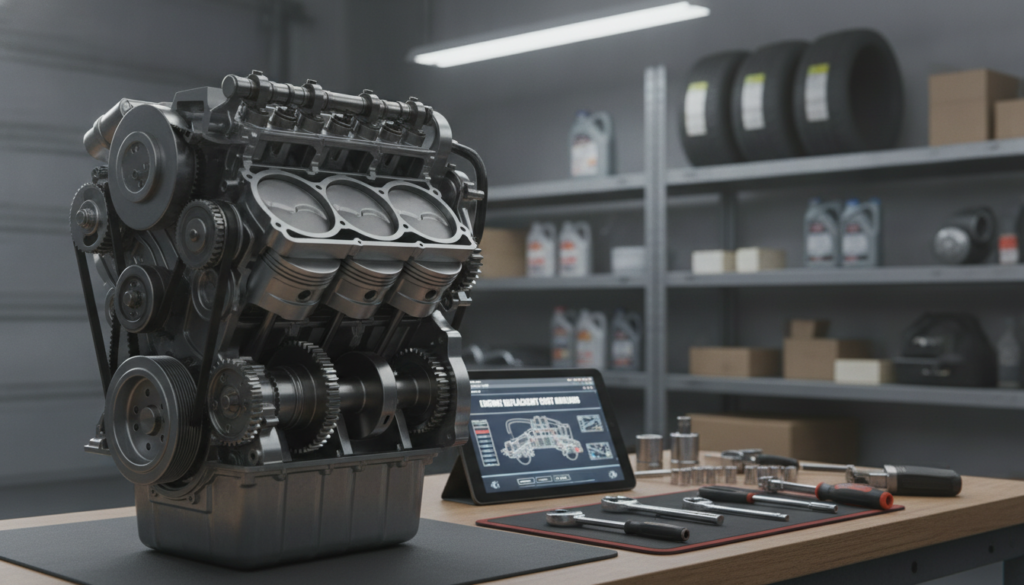
Your vehicle’s engine is often considered its heart. When it fails, it can feel like your car is done for. However, a full engine replacement can breathe new life into your ride. This process is much like a heart transplant for your vehicle, requiring careful planning and a solid budget.
In this guide, we will help you understand the financial aspects of engine replacement. Knowing the potential costs can empower you to make informed decisions about your transportation needs. Costs can vary widely, typically ranging from $2,000 to $10,000, depending on your specific vehicle and the shop you choose.
We’ll explore why an engine might need a replacement and what factors influence the total expenses. Understanding these elements is essential for any car owner facing significant mechanical issues today.
Key Takeaways
- A full engine replacement can revitalize your vehicle.
- Budgeting for this major repair is crucial.
- Costs typically range from $2,000 to $10,000.
- Understanding why your engine may fail is important.
- Making informed decisions can save you money in the long run.
Understanding Engine Replacement
Your vehicle’s performance hinges on the functionality of its engine. When problems arise, understanding the common causes of engine failure is essential. Many factors can lead to severe issues, making it crucial to recognize the signs early.
According to Jorge Pinto, an auto mechanic based in New Jersey, you should carefully consider the age and condition of your vehicle before proceeding with repairs. Common causes of engine failure include:
- A cracked engine block, often due to extreme overheating or freezing temperatures.
- Seized or locked engines that won’t run after a major failure.
- Excessive smoke or metal shavings in your oil, indicating serious problems.
When catastrophic damage occurs, the decision to replace your engine becomes necessary. Understanding these factors can help you make informed choices about your vehicle’s future.
Engine Replacement Cost Breakdown
The engine is a crucial component that drives your vehicle’s performance. When it comes to replacing it, understanding the associated costs is essential. The total expenses typically range from $2,000 to $10,000, depending on your vehicle’s make and model.
Costs are divided between the parts needed and the labor required for installation. Labor fees usually range from $1,200 to $2,200, covering approximately 15 to 20 hours of work. When purchasing parts, remember to factor in the engine itself and any additional components, like gaskets or seals.
To get a precise estimate, it’s best to reach out to several reputable mechanics in your area. This way, you can compare quotes and make an informed decision about your engine replacement.
Key Factors Influencing Engine Replacement Cost
Every vehicle relies on its engine for power and performance. When considering a replacement, several key factors can significantly impact the price you pay.
The type of vehicle you drive plays a major role in determining the overall expenses. Luxury models, like a Mercedes, often require complex engines, leading to higher costs—sometimes exceeding $16,000.
In contrast, if you own an economical vehicle, such as a Honda, you might find a used engine replacement for as low as $1,800.
Additionally, the size and complexity of the engine affect the total price. High-performance engines typically require specialized labor and parts, driving costs up.
Finally, consider any additional repairs that may arise, such as replacing engine mounts or cooling system components. These can add to your overall expenses.
Engine replacement cost without warranty
When it comes to replacing a vital part of your vehicle, the financial implications can be significant. If you face an engine replacement cost without a warranty, you must be ready to pay the full amount out of your own pocket.
Without the safety net of a warranty, the total expenses for your car repair can quickly escalate. Unexpected issues during installation can lead to additional costs that you may not have anticipated.
It’s essential to ask your mechanic about the risks involved when replacing an engine that is no longer covered. Verifying the quality of the engine before installation is crucial since you are responsible for the entire replacement.
Many car owners find that the best way to save money is to compare quotes from different shops. This careful approach can help ensure you are not overpaying for the engine replacement.
New vs. Rebuilt vs. Used Engine Options
When considering your vehicle’s future, the type of engine you choose can significantly impact performance and reliability. Each option comes with its own set of advantages and disadvantages.
Pros and Cons of New Engines
Choosing a new engine from an automaker is the most expensive option, but it provides the highest level of reliability for your car. You can expect a strong warranty and peace of mind with this choice. However, the high price tag may not fit every budget.
Advantages of Rebuilt and Used Engines
A rebuilt engine serves as a great middle-ground option. It has been disassembled and refreshed to meet original manufacturer operating tolerances. This can offer a balance between cost and reliability.
If you choose a used engine, you are selecting the cheapest option. However, this comes with more risk regarding its past maintenance history. It’s essential to verify the engine’s condition before making a purchase.
| Engine Type | Cost | Reliability | Warranty |
|---|---|---|---|
| New Engine | High | Very High | Strong Warranty |
| Rebuilt Engine | Moderate | High | Limited Warranty |
| Used Engine | Low | Variable | No Warranty |
Each engine option has specific trade-offs. Discuss the pros and cons of each with your trusted local mechanic. Whether you select a new engine or a used one, ensure the choice meets your long-term goals for the life of your vehicle.
Understanding Engine Replacement Labor Costs
When you think about replacing a crucial part of your vehicle, labor expenses often come to mind. These costs can vary widely based on several factors, making it essential to understand what to expect.
Typical labor for an engine swap usually takes between 10 to 12 hours. However, for more complex jobs, it can stretch up to 15 hours. You should also consider that shop rates can fluctuate significantly. They can range from $90 to over $150 per hour, depending on the facility.
Here are some key points to keep in mind:
- Labor costs make up a significant portion of the total price.
- Most shops quote between 10 and 12 hours of work for a standard job.
- On simpler engine tasks, a skilled mechanic might finish in as little as 8 hours, saving you on labor.
- Dealerships typically charge higher rates due to their specialized expertise.
- Always confirm the estimated time, as larger jobs can take up to 15 hours.
Understanding these labor costs can help you plan your budget effectively. As the saying goes, “Knowledge is power.” Knowing what to expect can ease the stress of the process.
Financing, Warranty and Insurance Coverage
Understanding the financial landscape surrounding your vehicle’s engine is crucial. When it comes to repairs, knowing your coverage options can make a big difference. Let’s dive into warranty limitations and how insurance can help with engine repairs.
Warranty Limitations and Coverage Details
If your vehicle is still under a powertrain warranty, it may cover the engine if the failure is due to a manufacturing defect. According to S&J Engines, you must follow prescribed break-in procedures and provide proof of professional installation to maintain your warranty coverage.
Insurance Considerations and Financing Options
Auto insurance typically does not cover mechanical failure. However, it may cover engine repairs if the damage resulted from a collision. To ease the financial burden, consider financing options like the Synchrony Car Care credit card. This can help you pay for your engine repairs promptly.
Always review your specific warranty and insurance policies. In some cases, an engine may be covered if the stars and clauses align correctly.
| Type | Coverage | Notes |
|---|---|---|
| Powertrain Warranty | May cover engine issues | Check for manufacturing defects |
| Auto Insurance | Collision-related repairs | Mechanical failure typically not covered |
| Financing Options | Helps manage costs | Synchrony Car Care card available |
Tips to Save Money on Replacing Your Engine
Replacing an engine can be a daunting task, but there are ways to save money during the process. Here are some practical tips to help you keep your expenses in check.
Getting Multiple Quotes
Start by getting at least three quotes from different mechanics. This approach is a proven way to save money on your engine replacement project. Labor costs can vary significantly, so comparing prices is essential.
Exploring Alternative Engine Options
Consider using an aftermarket engine instead of an OEM part. Aftermarket options are often more affordable and can provide reliable performance. If you’re on a tight budget, think about a refurbished or used unit to lower your total expenses.
Always ask your mechanic if a repair is possible. Fixing the existing engine can often be cheaper than a full replacement. By exploring all your options, you can find a way to keep your car on the road without breaking your financial budget.
| Tip | Description |
|---|---|
| Get Multiple Quotes | Compare prices from different shops to find the best deal. |
| Aftermarket Engines | Consider using aftermarket parts for savings. |
| Refurbished Options | Look into refurbished or used engines for lower costs. |
| Repair First | Ask about repairing the current engine instead of replacing it. |
Making the Decision: Replace or Repair?
Deciding whether to fix or replace your vehicle’s engine is a significant choice. You need to weigh the costs against the benefits. Evaluating the overall condition of your car is crucial. This includes not just the engine but also the interior and suspension systems.
A full engine rebuild typically costs between $2,500 and $4,000. This can be a more affordable option if the core of your engine is sound. Using resources like Kelley Blue Book can help you determine your vehicle’s current value. This information is vital for making a financially wise decision.
If your car has high mileage or widespread engine problems, a replacement may offer more long-term reliability than a simple repair. Every car owner must consider their emotional attachment to the vehicle versus the practical reality of ongoing repair bills.
| Consideration | Repair Option | Replacement Option |
|---|---|---|
| Cost | $2,500 – $4,000 | Higher than repair |
| Reliability | Good if core is sound | Often better long-term |
| Vehicle Condition | Evaluate overall | May not be worth it |
Conclusion
Choosing to overhaul your vehicle’s core components is a significant decision. It’s essential to evaluate the condition of your car and weigh your options carefully. By gathering multiple quotes, you can gain a clearer picture of the expenses involved in replacing your engine.
Whether you opt for a new, rebuilt, or used engine, following maintenance recommendations is vital to prevent future issues. Remember, replacing engine components is often more cost-effective than purchasing a new vehicle, especially if your car is still in good shape.
We hope this guide empowers you to navigate the intricacies of engine replacement costs. With the right information, you can get back on the road with confidence.