
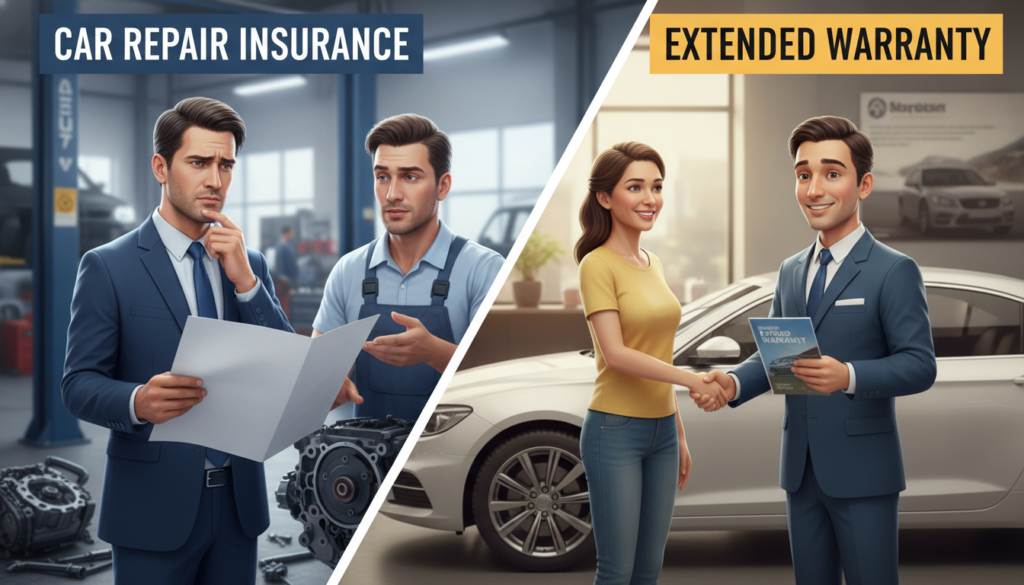
When it comes to owning a vehicle, understanding your options for financial protection is crucial. Many drivers often find themselves asking, “What is the difference between car repair insurance and an extended warranty?” This guide aims to clarify these concepts, helping you make informed decisions.
According to Ray Magliozzi, co-founder of Car Talk, knowing how to safeguard your vehicle is an essential part of ownership. You need to be prepared for both expected and unexpected costs. This is where the differences between these two types of protection come into play.
In this article, we will explore how your auto insurance policy differs from a warranty. By understanding these distinctions, you can avoid potential gaps in your coverage. You will also learn how to assess your specific needs to determine if you require additional protection beyond standard coverage.
Introduction to Car Protection Options
Navigating the landscape of vehicle financial protection options is vital for every owner. You have two primary choices: insurance and warranties. Understanding these options can help you avoid unexpected costs and ensure you are adequately covered.
Most states require you to carry liability insurance, while warranties are optional. Here’s a quick overview:
- Liability insurance is mandatory in most areas, protecting you against damages to others.
- Warranties cover mechanical failures but do not include routine maintenance like oil changes.
- Insurance safeguards your vehicle from external events, while warranties focus on internal systems.
Comparing these options is crucial. Relying on the wrong type of protection can leave you exposed to significant out-of-pocket repair costs. By selecting the right combination of coverage, you ensure your vehicle is protected against both financial liability and unexpected mechanical breakdowns.
What is Car Repair Insurance?
Understanding your financial safety nets for vehicle ownership is essential. One such option is mechanical breakdown insurance, often referred to as MBI. This specialized form of car insurance covers major mechanical failures that can lead to expensive repairs.
Companies like GEICO offer this coverage, providing a safety net when your vehicle encounters a covered breakdown. Unlike standard policies, this protection focuses on internal systems rather than damage from accidents or external events.
Consider this option seriously. Major repairs, such as replacing a transmission, can cost over $5,000. Having mechanical breakdown insurance can be a financial lifesaver. Remember, this insurance is distinct from a standard warranty and must be purchased separately from your provider.
Understanding Extended Warranties and Vehicle Protection Plans
It’s important to grasp the nuances of vehicle protection options to safeguard your investment. One of the primary types of coverage is the factory warranty, which is provided by the manufacturer. This warranty typically lasts for about 3 years or 36,000 miles on most new vehicles.
Once this initial coverage expires, you have the option to purchase an extended warranty or a vehicle protection plan. These plans continue to provide mechanical coverage, helping you avoid costly repairs.
Many third-party providers, like Endurance, offer these protection plans as vehicle service contracts. They can cover unexpected repair expenses and often include extra benefits like roadside assistance, giving you peace of mind.
Before committing, be sure to carefully review the terms of these plans. It’s crucial to ensure they cover the specific systems your vehicle relies on.
Car repair insurance vs extended warranty: Key Differences
Grasping the distinctions between various vehicle protection options can save you from unexpected financial burdens. Understanding these differences is essential to make informed choices about your coverage.
Coverage Areas and Claim Processes
The primary difference between car insurance and a warranty is that insurance is legally required, while a warranty is optional. In states like California, mechanical breakdown insurance is available to help you manage the costs of unexpected vehicle repairs.
When you file a claim for car insurance, you typically pay a deductible. This can lead to adjustments in your future premiums. On the other hand, warranty claims may require prior authorization, offering a different approach to coverage.
Cost Structures and Legal Requirements
It’s crucial to understand that insurance protects your financial liability, while a warranty protects the mechanical health of your vehicle. Because insurance companies regulate mechanical breakdown insurance, the claim process often follows the same strict guidelines as your standard auto insurance policy.
| Aspect | Car Insurance | Warranty |
|---|---|---|
| Legality | Required by law | Optional |
| Claim Process | Deductible applies | Prior authorization needed |
| Coverage Focus | Financial liability | Mechanical health |
| Regulation | State regulated | Varies by provider |
For more information on these coverage options, check out this resource.
In-Depth Analysis: Coverage, Cost, and Flexibility
When it comes to financial protection for your vehicle, understanding the costs and coverage options is essential. Unexpected repairs can lead to significant expenses that catch many owners off guard. For instance, a camshaft replacement for a Dodge Caravan can reach up to $1,661, while an engine mount for a Ford F-150 may cost around $851.
Additionally, the costs for replacing an air conditioning compressor in a Toyota Camry range from $847 to $999. Even a Honda Civic power steering pump replacement can set you back about $805. These figures highlight the importance of having adequate coverage to avoid financial strain.
Consider the Chevy Equinox, where an exhaust manifold replacement can cost $448. Such expenses illustrate that even minor mechanical failures can quickly deplete your savings. Always review the exclusions in your contract, as many plans do not cover routine maintenance or damages due to owner neglect.
For more insights on whether you need additional coverage, check out this article.
When to Consider Car Repair Insurance for Your Vehicle
Knowing when to seek additional coverage can help you avoid unexpected repair costs. If you own a newer vehicle with fewer than 15,000 miles, consider mechanical breakdown insurance. This type of coverage is often a smart way to extend your protection beyond the standard factory warranty period.
Because this coverage is linked to your car insurance policy, it can be easier to manage than a separate third-party contract. However, keep in mind that most providers will stop offering this insurance once your vehicle reaches seven years of age or 150,000 miles.
If you drive a late-model vehicle, this insurance provides a reliable layer of protection against the high cost of major mechanical failures. It’s worth considering if you want peace of mind on the road.
When an Extended Warranty is the Better Choice
Knowing when to invest in additional coverage is key to safeguarding your vehicle from future issues. An extended protection plan can be especially beneficial if your vehicle has surpassed the limits of its original factory coverage.
You can purchase extended warranties from various providers, such as Endurance, which offers flexible plans tailored to your budget. Additionally, these plans are often transferable, making your vehicle more appealing to potential buyers when it’s time to sell.
It’s wise to secure an extended warranty before any mechanical problems arise. Pre-existing conditions are rarely covered by these contracts, so early action is essential.
- An extended warranty is often the better choice if your vehicle has already exceeded the limits of its original factory warranty.
- Buying an extended warranty can actually make your vehicle more appealing to future buyers.
- It is wise to purchase extended warranties before you experience any mechanical issues.
- By choosing a comprehensive plan, you ensure that your vehicle remains protected against expensive repairs for many years into the future.
Choosing the Right Protection for Your Budget and Needs
Choosing the best protection for your vehicle requires careful consideration of your needs and budget. With various options available, it’s essential to evaluate what each provider offers.
Companies like GEICO provide flexible plans that include liability, collision, and comprehensive coverage. This allows you to tailor your protection based on your specific vehicle and financial situation.
Evaluating Different Providers and Their Plans
When selecting protection plans, compare the monthly premiums against potential repair costs. This can help you make informed decisions.
- Look for a company with transparent terms and a strong customer service history.
- If you own a high-mileage vehicle, seek plans that offer comprehensive mechanical coverage.
- Always read the fine print to understand what is covered and where repairs can be done.
Expert Advice and Practical Tips for U.S. Car Owners
Understanding the essentials of vehicle coverage can significantly impact your ownership experience. To ensure you have the right protection, start by assessing your vehicle’s specific needs. Consider factors like age, mileage, and your driving habits. This evaluation will help you determine whether you need additional coverage beyond your standard plan.
When comparing different protection plans, it’s essential to look for features that suit your lifestyle. Here are some key recommendations:
- Stay proactive with your vehicle maintenance to avoid unnecessary mechanical repair bills.
- Call the Endurance team at (800) 253-8203 for a free quote and to learn about their various protection plans.
- Ensure your plan includes essential services like 24/7 roadside assistance and trip interruption coverage.
- Check if the service provider allows you to choose your own ASE-certified mechanic for repairs.
- Having the right coverage provides the peace of mind you need to drive without worrying about sudden, expensive mechanical failures.
Conclusion
Deciding on the right financial protection for your vehicle can greatly influence your ownership experience. Choosing between car repair insurance and an extended warranty hinges on your vehicle’s age, budget, and specific coverage needs.
While companies provide mandatory liability coverage, optional service contracts and warranties offer vital protection against costly mechanical breakdowns. Remember, a manufacturer warranty is limited by years and mileage, making extended warranties or service contracts a smart long-term investment.
Prioritize plans that allow flexibility, such as choosing your own repair shop. By combining the right auto insurance with a reliable warranty, you ensure your vehicle remains protected against both accidents and mechanical failures.
Ultimately, the peace of mind provided by these protection plans is worth the cost when you consider the price of modern vehicle repairs.