
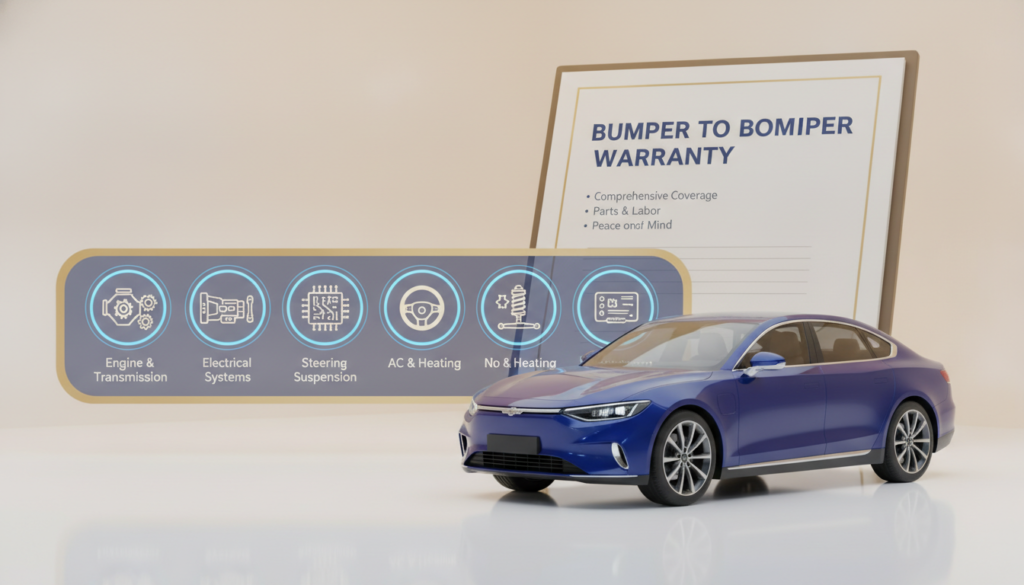
When you buy a new car, understanding your vehicle’s coverage is essential. This guide dives into the details of a comprehensive warranty that protects your investment. A bumper to bumper warranty safeguards your car against unexpected mechanical failures during the initial years of ownership.
Most manufacturers offer this extensive protection to ensure your new vehicle remains reliable. It also helps you avoid significant repair costs early on. By familiarizing yourself with how this coverage works, you can maximize its benefits and minimize out-of-pocket expenses.
This guide equips you with the vital information needed to feel confident about your vehicle’s protection. You will also learn about the specific terms outlined in your manufacturer agreement.
Key Takeaways
- Understanding your warranty helps navigate factory coverage.
- This warranty protects against unexpected mechanical issues.
- It ensures reliability and reduces early repair costs.
- Learning how it works maximizes your coverage value.
- This guide provides essential information for your peace of mind.
Introduction and Overview
When you invest in a new vehicle, knowing its coverage can make a big difference. This guide will help you understand how a bumper warranty functions to protect your car during the initial years of ownership. You’ll discover the distinctions between various types of coverage, ensuring clarity on what your warranty protects over time.
We will also explore the specific components of your car that are shielded by this warranty. This knowledge will help you manage your vehicle maintenance effectively. By the end of this overview, you will be prepared to make informed decisions about your car and its long-term protection needs.
Understanding these details saves you time and effort when dealing with potential mechanical issues that might arise during your ownership period.
Bumper to bumper warranty explained: Key Features and Benefits
Familiarizing yourself with your vehicle’s warranty can greatly benefit you as a new car owner. A bumper warranty offers extensive coverage, protecting your investment from unexpected failures. This plan is designed to shield various components, ensuring you have peace of mind while driving.
The key features of this warranty include:
| Component | Coverage | Benefits |
|---|---|---|
| Electrical Systems | Full Coverage | Protection against costly repairs |
| HVAC Systems | Full Coverage | Comfort and functionality |
| Drivetrain Components | Full Coverage | Reliable performance |
By selecting a plan that includes this level of coverage, you can avoid the financial burden of sudden repairs. This comprehensive contract ensures that your car remains in top condition for years to come. With major components fully covered, you can drive with confidence, knowing that you’re protected against unexpected issues.
Anatomy of a New Vehicle Limited Warranty
Understanding the coverage of your new vehicle is crucial for a worry-free ownership experience. Every new car comes with a factory warranty that outlines the protection you can expect. For example, a typical bumper warranty lasts for 3 years or 36,000 miles, whichever comes first.
It’s important to note that this warranty expires based on the first condition met, either the time or the mileage. While the bumper warranty covers many components, your powertrain warranty usually lasts longer, typically extending to 5 years or 60,000 miles.
Being aware of these terms helps you understand when your factory warranty coverage ends. This knowledge is vital for planning future protection needs. Most manufacturers design their coverage to protect your car effectively for those initial years, but understanding the differences can save you money in the long run.
| Warranty Type | Duration | Coverage |
|---|---|---|
| Bumper Warranty | 3 years or 36,000 miles | Most components |
| Powertrain Warranty | 5 years or 60,000 miles | Engine and transmission |
What is Covered Under Your Warranty
Understanding what your warranty covers is key to protecting your investment in a new vehicle. This coverage extends beyond just the engine and transmission, ensuring that various essential systems are safeguarded. Here’s a closer look at what you can expect.
Powertrain coverage details
Your powertrain warranty primarily focuses on the engine and transmission. However, it’s essential to know that your bumper warranty also covers several critical systems that keep your car running smoothly.
Other essential components
Here are some of the key parts included in your bumper warranty:
- Your bumper warranty covers critical systems like air conditioning, including the condenser, compressor, and evaporator for your car.
- While your powertrain warranty focuses on the engine and transmission, the bumper warranty protects other essential electrical and safety components.
- The coverage provided by your bumper warranty ensures that complex systems like power windows and door locks remain functional for your car.
- Although brake pads are often excluded, your bumper warranty covers the steering and suspension parts that keep your car moving safely.
- By including these parts in your warranty, the manufacturer ensures that your car remains reliable and safe for your daily driving needs.
| Component | Coverage | Details |
|---|---|---|
| Air Conditioning | Full Coverage | Includes condenser, compressor, and evaporator |
| Electrical Systems | Full Coverage | Power windows and door locks |
| Steering and Suspension | Full Coverage | Ensures safe handling and driving |
Common Exclusions in Bumper-to-Bumper Warranties
Knowing what your warranty does not cover is just as important as understanding what it does. Many car owners are surprised to learn that certain items and damages fall outside the scope of their coverage. This awareness can help you budget effectively and avoid unexpected costs.
For instance, wear items like brake pads, tires, and wiper blades are typically not included in your bumper warranty. These parts naturally degrade over time and are expected to be replaced during regular maintenance. Additionally, if your car suffers damage from an accident, you will need to rely on your auto insurance for repairs.
Cosmetic issues, such as scratches or upholstery damage, are also excluded from your coverage. These are not considered factory defects and won’t be repaired under the warranty. Regular maintenance tasks, like oil changes, are another expense you must cover yourself.
Understanding these exclusions helps you manage your car budget effectively and prevents confusion when seeking repairs at a dealership.
| Exclusion Type | Description | Responsibility |
|---|---|---|
| Wear Items | Brake pads, tires, wiper blades | Owner’s expense |
| Accident Damage | Repairs from collisions | Auto insurance |
| Cosmetic Issues | Scratches, upholstery damage | Owner’s expense |
| Regular Maintenance | Oil changes, routine services | Owner’s expense |
Extended Warranty Options and Third-Party Providers
Choosing the right coverage for your vehicle can significantly impact your ownership experience. While manufacturer warranties provide essential protection, many drivers explore extended warranty options. These plans can offer more flexibility and broader coverage for your car.
Third-party providers often allow you to select your own repair shop, which can be a major advantage. This flexibility is appealing to many car owners who prefer not to be tied to a specific dealership.
One reputable company in this space is Endurance. They offer various vehicle service contract plans that can protect your car after the original coverage expires.
Here are some benefits of considering an extended warranty:
- An extended warranty from a third-party provider can offer more flexible coverage for your car than a standard manufacturer contract.
- Many drivers prefer these extended warranties because they allow you to choose your preferred repair shop rather than a specific dealership.
- A reputable company like Endurance provides various plans that act as a vehicle service contract to protect your car after the factory warranty.
- When your original coverage expires, an extended warranty ensures your car remains protected against the cost of unexpected mechanical failures.
- Choosing the right provider is essential, as different plans offer varying levels of coverage and benefits for your specific car model.
| Provider Type | Coverage Flexibility | Repair Shop Choice |
|---|---|---|
| Manufacturer | Limited | Specific dealership only |
| Third-Party | More flexible | Any repair shop |
| Endurance | Comprehensive | Any repair shop |
Real-Life Scenarios: When Warranties Save You Money
Owning a car can come with unexpected costs. Having a warranty can save you from hefty repair bills. Consider how a warranty can protect your finances when serious issues arise.
For instance, a blown head gasket can cost between $1,915 and $2,220 to repair, according to RepairPal. If your car experiences this major failure, a warranty can cover those expensive repairs. This is especially important for complex systems like the engine and transmission.
Here are some real-life benefits of having coverage:
- Coverage for your engine and transmission ensures you don’t pay out of pocket for these costly repairs.
- On long road trips, a warranty gives you peace of mind, knowing your car is protected against unexpected failures.
- By covering parts and labor, a warranty prevents a single mechanical issue from derailing your financial plans.
- These scenarios illustrate why having a warranty is a smart investment for any car owner concerned about future repair costs.
| Repair Type | Estimated Cost | Warranty Coverage |
|---|---|---|
| Blown Head Gasket | $1,915 – $2,220 | Covered |
| Transmission Failure | $1,500 – $3,000 | Covered |
| Engine Replacement | $4,000 – $7,000 | Covered |
Cost and Value Considerations for Warranty Plans
Understanding the financial aspects of your warranty options is crucial. The cost of an extended warranty can vary widely based on several factors. For instance, a recent study found that bumper warranty quotes for a 2018 Toyota Camry ranged from $1,700 to $4,600. This variation is influenced by your car’s age and mileage, as well as the specific provider you choose for your vehicle service contract.
When evaluating your options, consider the following:
- The price of an extended warranty is affected by your car’s current age and the total miles on the odometer.
- Coverage typically expires based on whichever comes first: the years of the contract or the total miles driven.
- A reputable company will offer clear pricing for their plans, ensuring you understand the total cost of protecting your vehicle.
- It’s wise to compare quotes from multiple providers to find the best value for your extended warranty coverage.
- Investing in these plans can save you money in the long run, especially if your car accumulates high miles and needs frequent repairs.
| Vehicle Type | Warranty Cost Range | Factors Affecting Price |
|---|---|---|
| 2018 Toyota Camry | $1,700 – $4,600 | Age, mileage, provider |
| 2019 Honda Accord | $1,800 – $4,800 | Age, mileage, provider |
| 2020 Ford Escape | $2,000 – $5,000 | Age, mileage, provider |
Tips to Choose the Right Warranty Provider
Selecting the right provider for your extended warranty can greatly enhance your car ownership experience. It’s essential to research thoroughly to ensure you make an informed decision.
Start by looking for a company with high ratings from the Better Business Bureau. This can indicate reliable service and sound business practices. For example, CARCHEX holds an A+ rating, reflecting their commitment to customer satisfaction.
Next, read customer reviews to gauge how well the provider handles claims for parts and labor. This insight can help you understand their service quality during crucial moments.
Additionally, the best plans often come with extra benefits. For instance, Endurance offers a free year of Elite Benefits, which includes tire repairs and key fob replacement for your car.
Always review the sample contract before signing. This ensures you know exactly what is covered for your vehicle. A trustworthy company will also have a responsive customer service team ready to assist you with any questions.
Conclusion
Having clarity on your vehicle’s coverage is essential for long-term satisfaction. A bumper warranty provides crucial protection for your car during the first 3 years or 36,000 miles of ownership. Once this factory coverage ends, consider purchasing an extended warranty or vehicle service contract to keep your car safeguarded for many more miles.
Whether you opt for a manufacturer plan or a third-party provider, these warranties cover vital systems like the engine and transmission. Remember, your bumper warranty expires based on whichever comes first, so plan your future coverage needs in advance.
By maintaining your car and understanding your warranty, you can avoid costly repairs and enjoy your vehicle for years. Always compare different plans to find the best coverage for your car, ensuring you have the right protection for your specific driving habits. With the right warranty in place, you can drive confidently, knowing your car is shielded from unexpected mechanical failures and expenses.
For more insights on vehicle protection options, check out this comparison of warranty providers.