
Did you know that many drivers pay thousands out of pocket after a breakdown simply because they mistook an extended plan for a factory warranty?
You need clarity when choosing a plan for your vehicle. This guide compares a dealership-backed insurer model with a marketplace approach that pairs multiple administrators and coverage tiers.
You’ll learn how coverage levels range from basic powertrain to near-comprehensive options, what add-ons like roadside assistance and rental reimbursement actually cover, and how claims typically work at ASE-certified shops.
Expect practical tips on spotting exclusions, gauging financial strength (Zurich holds an A++ AM Best rating), and aligning costs with your car’s age and mileage.
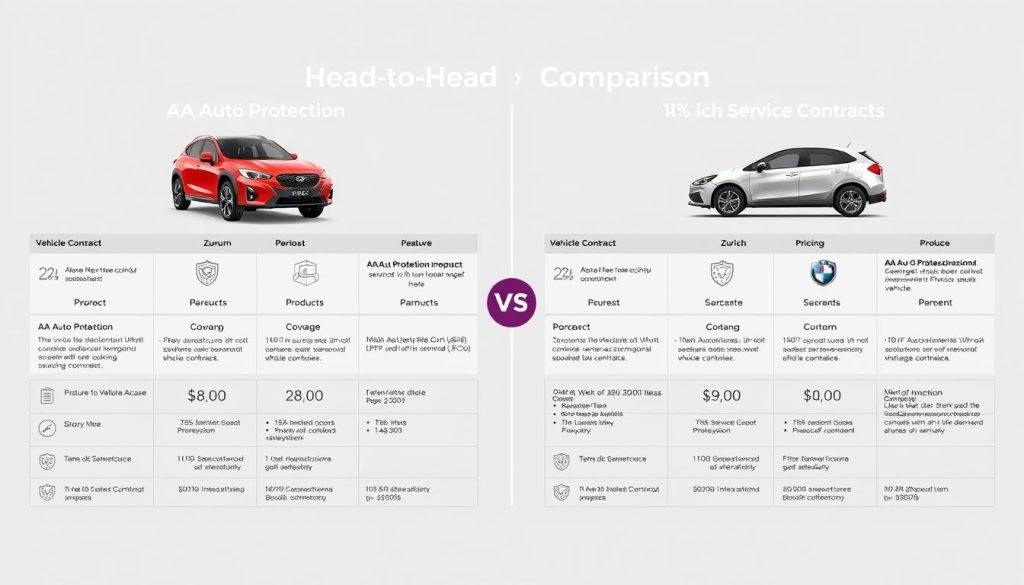
For a deeper side-by-side comparison and real-world scoring, see this detailed comparison to help you pick the right protection plan with confidence and peace mind.
Key Takeaways
- Dealership-backed contracts and marketplace plans follow different buying paths with different pros and cons.
- Coverage tiers and add-ons drive true value more than the headline price.
- Claims, deductibles, and repair approvals shape real-world customer experience.
- Financial strength and reviews matter when you evaluate companies.
- Compare exclusions and costs by vehicle age, mileage, and term to match budget and risk.
At a Glance: How these vehicle service contracts stack up in the present market
Choosing the right protection plan means matching coverage to how you drive and how long you keep a car.
Dealer-offered programs typically come in three clear tiers: powertrain, standard, and comprehensive. Each tier usually includes roadside assistance, trip interruption, and rental reimbursement at participating dealers.
Marketplace providers offer more levels—often five—and let you pick among multiple administrators. This can mean flexible terms, 30-day money-back windows, and broader shop choice, including ASE-certified repair facilities.
Key differences in scope, availability, and purchase path
- You can buy dealer-only plans only at participating dealerships; marketplaces let you compare multiple plans and administrators.
- Coverage levels vary: dealer tiers are simpler; marketplaces add mid-tier options for a finer fit across years and budgets.
- Not all plans cover the same parts—compare electrical, suspension, A/C, and tech systems before you commit.
Which option may fit your budget, mileage, and risk tolerance
Price depends on vehicle age, mileage, deductible, and term. If you want single-insurer convenience, a dealer model may suit you.
If you prefer flexibility, longer terms, or the chance to shop administrators, a marketplace model often fits higher-mileage drivers and those keeping a car for more years.
| Feature | Dealer Tiers | Marketplace Options |
|---|---|---|
| Coverage levels | 3 (powertrain → comprehensive) | 3–5+ (more mid-tier choices) |
| Where to buy | Participating dealerships only | Online or through brokers; multiple administrators |
| Repair access | Dealerships + ASE shops | ASE shops, dealerships, wider shop choice |
| Return/cancellation | Dealer terms | Often 30-day money-back options |
AA Auto Protection vs. Zurich Vehicle Service Contracts
Your buying path—dealer-only or brokered online—shapes pricing, shop access, and claims handling.
Provider models: dealership-backed insurer and third-party marketplace
Dealer models are underwritten by one insurer and sold at dealerships. In many states, contracts are administered by Universal Underwriters Service Corporation or state-specific entities. That setup gives you a single underwriter and three tiers of protection.
Availability, plan count, and flexibility
Marketplaces act as brokers. They present multiple administrators and often offer five tiers to better match price and coverage. You’ll usually see more deductible and term options and wider shop choice, including ASE-certified facilities.
Financial backing and reputation signals
Financial strength matters. An insurer with an A++ AM Best rating signals deep backing. Customer service trends and BBB ratings reveal how claims and denials play out in practice.
“Pick the model that matches how you buy and how much reassurance you want.”
- Compare limits for roadside, towing, rental, and trip interruption.
- Check administrator names and state filings before you sign.
Coverage deep dive: Powertrain to comprehensive protection
Digging into what each tier actually pays for helps you avoid surprise bills down the road.
Powertrain tiers typically protect the big, expensive pieces. A basic powertrain plan covers the engine, transmission, transfer case, and drive axles. That level suits drivers who want essential protection at a lower price.
Tier breakdown and common gaps
The mid or standard tier adds suspension, steering, brakes, and air conditioning, plus selected electrical parts. The comprehensive tier moves closer to exclusionary coverage, protecting most components except listed exclusions. Always check that electronics and convenience systems are clearly detailed.
Exclusionary vs stated-component styles
Exclusionary plans list what is not covered. Stated-component plans list what is covered. Read both types carefully so parts, labor, and diagnostic limits match your expectations.
High-value add-ons and perks
- Most tiers include roadside assistance, trip interruption, and rental reimbursement.
- Marketplace top-tier plans often mirror a platinum plan with towing and fuel delivery added.
- Confirm labor rates, OEM part rules, waiting periods, and mileage limits before you buy.
“Match the plan level to how many years you expect to keep the car and your tolerance for out-of-pocket risk.”
What’s not covered: Common exclusions and limitations you need to know
Not all parts and problems fall under a coverage promise—contracts often carve out routine wear and cosmetic issues.
Wear and maintenance items are usually excluded. Expect brake pads, wiper blades, drive belts, coolant hoses, filters, and wheel balancing to be listed as owner responsibility.
Exterior and cosmetic components are commonly off-limits. Glass, lenses, moldings, weather strips, upholstery, convertible tops, and trim often have no coverage even in top-tier plans.
Situational exclusions to watch
Collision, environmental events, and neglect are standard exclusions. Flood, hail, rust, and damage from poor maintenance can lead to claim denials.
- Some systems—catalytic converters, exhaust, shock absorbers, and most batteries—are frequently excluded.
- Rattles, squeaks, water or air leaks, panel alignment, and fit/finish issues are usually not covered.
- Aftermarket parts or modified suspensions can void coverage for related repairs.
Read the service contract and keep maintenance records. That helps you know if a repair qualifies and reduces the chance of surprises when you file a claim under your protection plan or warranty.
Claims experience and customer service: From diagnosis to payment
When a breakdown happens, the path from diagnosis to payment often determines whether a claim feels simple or stressful. Start by taking your vehicle to a dealership or an ASE‑certified repair shop for a diagnosis and coverage check.
How the claims process works at ASE‑certified shops and dealerships
The repair team verifies coverage and sends a pre-authorization request. Pre-approval is key — repairs done without it may lead to out-of-pocket costs.
Direct pay, deductibles, and approval timelines
For approved claims, you usually pay your deductible and any non-covered items at the shop. The company then issues direct payment to the facility for the covered balance.
Approval timelines vary. Parts availability, diagnostic complexity, and administrator procedures affect how long repairs wait for authorization.
What mixed customer reviews reveal about denials and delays
Online reviews show both smooth direct-pay outcomes and complaints about denials, delays, or eligibility disputes. Good customer service often resolves issues faster.
- Keep maintenance records and the contract handy to prove eligibility quickly.
- Use roadside assistance if you need a tow to a covered repair location and ask about rental reimbursement while repairs proceed.
- If a claim is denied, request written reasons that cite contract language and consider escalation if you disagree.
For a side-by-side look at how claims play out across providers, read this claims comparison.
Costs, deductibles, and payment terms
Expect wide swings in quotes—pricing reflects the car’s condition, parts at risk, and the deductible you pick.
What drives price is straightforward: the vehicle’s age and mileage, the plan tier, and the length of the term. Older, high‑mileage cars cost more to insure with extended warranty options than newer models still under a factory warranty.
Pricing factors to watch
Deductible level changes monthly payments. A higher deductible lowers the premium but raises what you pay at claim time.
Engine size, transmission type, and a car’s repair history also affect quotes. Marketplace data shows many buyers pay between $1,000 and $3,000, while the FTC notes ranges from a few hundred to several thousand dollars.
- Zurich quotes come only through dealerships; you cannot get public pricing online.
- Marketplaces let you compare multiple administrators and plan designs for better value.
- Coverage add-ons like rental, roadside, and trip interruption vary in limits and can change overall value.
“Match deductible, monthly payment, and plan scope to your budget so you know what you’ll pay now and at the shop.”
Get multiple quotes and review each protection plan carefully. For a direct comparison of different offerings, see this side‑by‑side breakdown.
Plan flexibility and term length: Finding the right fit after your factory warranty expires
A plan’s duration should reflect your driving habits and resale timeline. When your warranty expires, pick terms that match how many years and miles you plan to keep the car. Shorter terms lower cost but may leave you exposed as the car ages.
Customizable plans and mileage caps
Look for customizable plans that let you adjust mileage caps and deductibles. Marketplace options usually offer more term choices, multiple deductible levels, and broader mileage caps than dealer-only offerings.
That flexibility helps you balance monthly cost and out-of-pocket risk at repair time.
Transferability, refunds, and cancellation windows
Transferable contracts can boost resale value. Dealer-sold plans are often transferable—confirm any fees and the transfer window before you buy.
Marketplace plans commonly include a 30-day money-back period and prorated refunds later if no claim was filed.
- Confirm the service contract start date, waiting period, and mileage thresholds.
- Verify roadside assistance, rental reimbursement, and trip interruption limits.
- Ask how modifications or commercial use affect eligibility.
| Feature | Dealer-Sold | Marketplace |
|---|---|---|
| Term options | Standard 3 tiers; fixed terms | More term choices; customizable |
| Transferability | Often transferable; may have fees | Varies by administrator |
| Refunds/cancellation | Dealer terms apply | 30-day money-back; prorated refunds |
| Repair locations | Dealerships and ASE shops | Dealerships, ASE shops, wider shop network |
Who each option is best for: Matching plans to your vehicle and driving profile
Start by listing what failures would cost you most, then pick coverage that shields those risks.
If you buy at a dealership and want insurer backing with simple tiers, a three-tier dealer plan can give straightforward access to dealerships and ASE‑certified shops nationwide. That model often includes roadside assistance and clear claims paths, which many customers value for peace of mind.
If you want more plan levels, high-mileage options, or flexible terms, a marketplace approach offers extra tiers—from a basic powertrain level up to a platinum plan equivalent. These plans suit shoppers who keep cars longer or need broader coverage for engine, transmission, and air conditioning repairs.
Which fits your profile?
- If you commute long hours or drive for rideshare, favor higher coverage to limit exposure on costly failures.
- If your car stays in a garage and logs low miles, a mid-level plan that adds key systems beyond powertrain can be cost-effective.
- If your factory warranty just ended and you’re budget‑sensitive, a powertrain plan controls major risks while keeping premiums low.
- If you swap cars often, choose a transferable plan and confirm any transfer fees to protect resale value.
| Buyer profile | Dealer three-tier fit | Marketplace fit |
|---|---|---|
| Dealership buyer wanting insurer backing | Strong — easy dealer access, included roadside assistance | Moderate — possible but less focused on dealer channels |
| High-mileage or long-term ownership | Okay — limited tiers may not match high-mileage needs | Best — more tiers, customizable terms, broader coverage options |
| Cost-sensitive after factory warranty | Good — straightforward powertrain plans at lower cost | Good — can find low-cost powertrain or mid-tier alternatives |
| Need strong customer service and quick claims | Good — dealer networks often provide direct support | Varies — choose administrators with strong customer service records |
Final tip: Align your choice with how long you’ll keep the car, your tolerance for out‑of‑pocket costs, and the level of customer service you expect. For a deeper comparison of marketplace offerings and dealer-backed plans, see this detailed comparison.
Conclusion
A smart pick balances coverage, cost, and claims speed. If you value a dealer‑sold, insurer‑backed option with strong financial backing, that model can offer clear tiers and included roadside support. If you prefer more tiers and shop choice, a marketplace gives extra flexibility and refund windows.
Focus on what matters: the parts covered, deductible size, approval timelines, and how payments are made to repair facilities. Get multiple quotes and read the full service contract before you buy.
For a deeper side‑by‑side look, see this detailed comparison. Make your final choice for total value so you can drive with genuine peace mind.